Influencers are social-media personalities who cultivate an engaged audience and earn trust that lets them guide others’ opinions or purchasing decisions. In digital terms, an influencer is “one who exerts influence” – often someone who can generate interest in a product or idea by posting about it on social media.
In this guide, you’ll learn what an influencer does, how they grow an audience (even from zero), and how to start making money – with practical examples, templates, and checklists along the way.
- Influencers build trust. They create content, cultivate a community, and guide followers toward products or causes.
- Niche and consistency matter. It takes time to become an influencer: you must pick a focused topic, know your audience, and post valuable content regularly.
- You can start small. Even with a few thousand followers, you can influence and earn. Micro/nano-influencers often command high engagement despite smaller audiences
Key Takeaways: An influencer creates content that earns audience trust and loyalty. It’s often a side hustle first (and can become a lucrative career). Success requires clear niche, regular posting, and audience engagement. We’ll cover how to pick a niche, grow a following, and monetize (brand deals, ads, products) step by step.
What Is an Influencer?
An influencer is essentially “a person who inspires or guides the actions of others”, especially online. In practice, influencers are people with social-media followings who can sway opinions or behaviors by virtue of their expertise or personality. They don’t have to be celebrities – micro- and nano-influencers with loyal, niche audiences are everywhere. Influencers typically do several things:
Create content. (Posts, videos, stories, blogs, etc. on their chosen platforms.)
Build community. (Engage followers through comments, polls, DMs, live streams.)
Establish trust and authority. (By sharing expertise, personal stories, or honest opinions.)
Distribute messages. (They amplify brands/products they endorse.)
Drive action. (Often nudging followers toward purchases or ideas.)
Influencers differ slightly from general content creators (who make any online content, not necessarily with an intent to persuade) and from UGC creators (everyday users who create organic user-generated content rather than professional marketing content). For example:
| Role | Description |
| Influencer | An expert or personality whose recommendations influence others’ choices. Builds authority and often partners with brands. |
| Content Creator | Anyone producing online content (videos, posts, etc.) across platforms, not necessarily focused on persuasion or brand partnerships. |
| UGC Creator | A regular consumer who creates content (reviews, unboxings, photos) based on personal experience or fandom, usually for fun or recognition, not as a paid role. |
What Is a Social Media Influencer? (Types)
A social media influencer is just an influencer whose platform is social networks (Instagram, TikTok, YouTube, etc.). They may also be called a digital influencer, online influencer, or even internet influencer. Social influencers often fall into types by platform, niche, or format:
By Platform: Different platforms attract different content and audiences. Instagram influencers excel with visual content (fashion, travel, food), TikTok influencers thrive on short viral videos (dance, comedy, trends), and YouTube influencers focus on longer video content (tutorials, reviews, vlogs). For example, TikTok is ideal for entertaining, Gen-Z–targeted videos, while Instagram is ideal for curated photos and quick clips.
By Niche: Popular niches include lifestyle, fitness, beauty, gaming, tech, finance, education, parenting, food, travel, and many more. Pick a topic you know and love. For instance, Instagram influencers often focus on fashion, beauty, food, travel, or fitness because these areas perform well on the visually-driven platform.
By Content Format: Influencers also vary by format: some specialize in short-form video (Reels or TikTok clips), others in long-form video (YouTube), live streams, podcasts, or written content (blogs/newsletters). For instance, a short-form video influencer may post TikTok dances or quick tips, while a long-form video influencer makes YouTube how-to guides.
No matter the type, the core is the same: building a dedicated audience around content they love.
How to Become an Influencer (10-Step Playbook)
Here’s a tight 10-step action plan. Each step includes examples or mini-templates you can use.
Step 1: Pick a Niche & Your “Influence Promise”
Choose a specific topic you’re passionate about and good at. This is your niche. Great niches meet three filters: Expertise, Interest, and Audience Demand. For example, if you love cooking (passion) and know kitchen tricks (expertise), see if people are searching for it (demand). Many successful influencers started by sharing their unique angle on a topic (e.g. vegan baking, quick tech hacks, or DIY home decor).
Tip: Think of your “influence promise” – what value you offer. For instance, “I show busy parents easy 5-minute recipes.” This clear promise attracts the right followers.
Step 2: Define Your Audience (Who They Are and Why They Care)
Clearly identify who you want to help and why they should care. Create a simple persona: age, interests, goals, problems. For example, “Sarah, 25, new mom interested in fitness and nutrition”. List their pain points (e.g. “struggle to exercise with a baby”) and how your content helps (e.g. “quick home workouts”).
This guides your content angles. If you’re in tech, maybe your audience is young professionals wanting gadget reviews. If in fashion, maybe trendy university students. Knowing your audience ensures you tailor topics and language to their needs.
Step 3: Choose Your Platform Based on Content Strength
Decide where to focus: Instagram, TikTok, YouTube, or other channels, depending on your content style and goals. Each platform has its strengths:
Instagram: Best for visual, aesthetic content (fashion, lifestyle, travel, food). Use Reels for wide reach (they can go viral) and Stories or Link in Bio for direct engagement. Instagram favors consistent, fresh content.
TikTok: Great for short, creative videos. Its algorithm can push even new creators’ content to large audiences quickly. Jump on trending sounds and hashtags to boost discovery.
YouTube: Ideal for in-depth, long-form videos (tutorials, explainers). YouTube searches help content stay discoverable over time. It requires more editing but offers steady growth and ad revenue.
Use this mini table to guide your choice:
| Platform | Best For | Key Tactics | Growth Levers |
| Aesthetic photos, Reels | Reels (viral reach), Stories (links/Q&A), IG Lives | Hashtags, collaborations, giveaways | |
| TikTok | Short viral videos | Trend participation, strong hooks in first sec | TikTok algorithm, duets, challenges |
| YouTube | Long videos, tutorials | SEO-friendly titles/descriptions, Playlists | Regular uploads, watch-time focus |
Example: Tamara at Dialect Fragrances suggests aligning format to goal: e.g. use Reels for daily outfit ideas (brand awareness) and YouTube for detailed tutorials.
Step 4: Build Your Influencer Brand (Positioning, Voice, Look)
Your brand = the unique impression you leave. Think like a mini-company: define your positioning (what makes you special), voice (friendly, humorous, educational, etc.), and visual style (colors, fonts, photo filters).
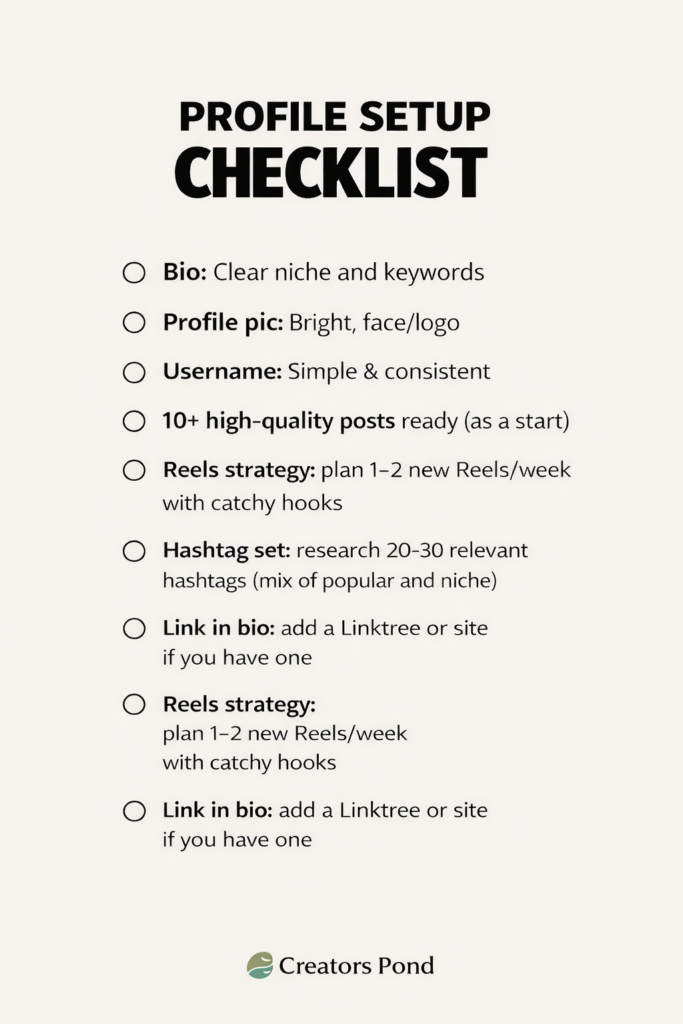
Profile Setup: Craft a compelling bio: mention who you are, what you do, and why follow you. E.g. “Chef Sarah – teaching busy moms easy 5-min meals”. A good formula: [Role/Name] – [Audience] – [Value Proposition].
Profile Picture & Name: Use a clear, high-quality photo of yourself or a consistent logo. Pick a username that’s simple and easy to search (ideally your name or niche keyword).
Consistency: Use the same profile image, name, and handle across platforms. Keep your posts’ look (filters, layout) consistent so followers recognize you.
Engage authenticity – the more “real” you are, the more followers will trust you.
Step 5: Create a Repeatable Content System
Plan around 3–5 content pillars (main themes) and build a simple posting cadence. For example, a fitness influencer might alternate: Workout Wednesday, Food Friday, Motivation Monday. A content calendar (weekly schedule) keeps you organized.
Content System Example:
Pillars: “Home Workouts”, “Quick Healthy Recipes”, “Fitness Tips”
Schedule: Post a Reel Monday/Wednesday/Friday; Stories daily; Live Q&A each Saturday.
This way you’re not scrambling daily to come up with ideas. (See the 30-Day Posting Plan below for a sample calendar.)
Step 6: Make Content That Earns Saves/Shares (Quality Signals)
To grow, create high-value content that people want to save or share. Use the structure:
- Hook: Grab attention in the first second (e.g. with a surprising visual or question).
- Value: Deliver something useful (a tip, a story, an answer).
- Proof: Show evidence or examples (before/after photos, testimonials, statistics).
- Call to Action (CTA): Encourage an action (like, share, comment, or follow).
For instance, a quick DIY video might start with the final impressive result (hook), then show the steps (value) and a caption that says “Tag a friend who’d love this!” (CTA). The more viewers save or share your post, the more social platforms reward you in the algorithm.
Step 7: Grow with Community (Comments, Collabs, Engagement)
Build your community actively:
Engage daily: Reply to comments and DMs promptly; like/comment on followers’ posts; run polls or AMAs. This “know, like, trust” strategy deepens loyalty.
Collaborate: Partner with other creators. For example, do a shout-out swap with an influencer in a related niche, or co-create a Reel. Outreach script sample: “Hi [Name], love your content on [topic]. I’m [Your Name], and I create [your content]. Would you like to collaborate on a [story/Reel] together? I think our audiences would enjoy it!”
Creator Networks: Join influencer communities (e.g. Discord groups, #collab requests on Twitter/Instagram) to find collab ideas. Tag and mention others to foster connections.
These community actions signal to social algorithms that your content is engaging, which boosts visibility.
Step 8: Track What Works (Simple Analytics)
Monitor a few key metrics to know what content is resonating:
Engagement: Likes, comments, shares, saves on each post.
Watch Time/Retention: On videos (especially YouTube/Reels) – how long do viewers watch on average? Longer watch time boosts algorithmic favor.
Profile Visits/Clicks: How many people click your profile from posts? How many link clicks.
Follower Growth: Track your follower count week by week.
For example, YouTube creators use analytics showing average view duration and click-through rate on thumbnails. On Instagram/TikTok, focus on saves and shares, not just likes. If a type of post consistently performs well (e.g. “Behind the scenes” Stories vs polished photos), lean into that. Regularly (e.g. weekly) review trends and adjust your content plan accordingly.
Step 9: Monetize (Even Before You’re “Big”)
Don’t wait until you’re famous to start making money – plan your monetization from early on. Common revenue streams (more below) include: brand sponsorships, affiliate marketing, digital products, services, ad programs, and more. For example, even with a small niche blog, you might sell an e-book or affiliate-link products. Keep a media kit (one-page profile of your stats and audience) ready to share with brands.
(We’ll dive deeper into how influencers get paid in the next section.)
Step 10: Keep It Sustainable (Avoid Burnout)
Consistency matters, but overextending yourself can lead to burnout. Set a realistic posting schedule – e.g. 3 times a week – and batch-produce content (film multiple videos in one day). Use tools like a shared calendar or content planner (or an app like Notion or Google Sheets) to plan ahead. Take periodic breaks; stay inspired by consuming content in your niche as a follower. Remember: quality and consistency beat quantity at the cost of your health.
Pro Tip: Block out specific “creation days” vs “engagement days.” For example, spend 2 days a week filming/editing, 3 days shooting quick videos, and daily 30-min blocks for replying to comments. This keeps content flowing without constant stress.
Platform Playbooks
How to Become an Influencer on Instagram
Optimize Your Profile: Use a clear profile photo, a searchable username, and a bio with keywords. For example: “@YourName – [Niche] for [Audience] – [Value Proposition]”.
Content Mix: Post a variety of formats: Reels (short videos) for reach, carousel posts for detailed tips, Stories for behind-the-scenes (with stickers/links), and Lives or IGTV for deeper engagement.
Hashtags & Captions: Use relevant hashtags (but avoid spammy ones) and write engaging captions with questions or prompts.
Quality Visuals: Good lighting and a consistent filter/theme help your grid look professional. According to HopperHQ, “one of the basics to earn a good following on Instagram is to be good with photos and videos”. Consider basic editing apps to make your posts stand out, but keep a uniform style so followers recognize your posts without even seeing your name.
Engagement Strategy: Post when your followers are active. Instagram rewards recent, engaging content. Use Stories Q&A or polls to interact.
Collaborate: Tag or duet with related influencers. Comment thoughtfully on posts in your niche – not generic “nice pic” but something like “Great tip, I actually do _ this way!” – to attract attention.
Checklist:
How to Become an Influencer on TikTok
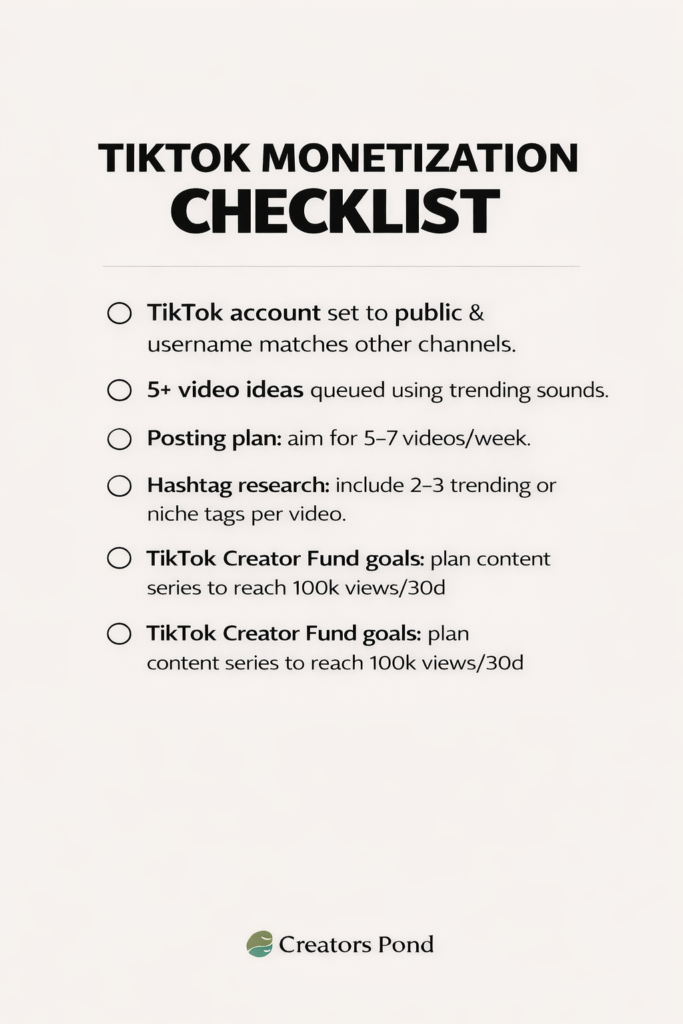
Understand the TikTok Algorithm: TikTok’s For You Page (FYP) is interest-based, so watch and engage with your niche content to train it. A longer watch-time (users watch your video all the way) signals quality.
Create Hook-Heavy, Trendy Content: The first 1–3 seconds are critical. Start with action or a question. Use trending music/sounds and hashtags when relevant. TikTok favors authenticity – the more genuine and creative, the better.
Niche & Consistency: Like any platform, pick a niche theme (even a fun one like “Harry Potter fashion”) and stick to it so the algorithm learns who to show you to. Post often; daily posting is common on TikTok because of its short format.
Community Engagement: Respond to comments on your videos, collaborate via Duets or stitches with others in your niche.
TikTok Creator Fund: For direct revenue, TikTok pays through its Creator Fund. (Requirement: 100,000 followers and 100,000 video views in the last 30 days.)
Monetization: Brand sponsorships on TikTok can be very lucrative. According to TRIBE, depending on audience and content, brands may pay anywhere from $200 to $20,000 per branded TikTok video. Even small creators can earn with affiliate links or by selling products.
Mini-Checklist:
How to Become an Influencer on YouTube
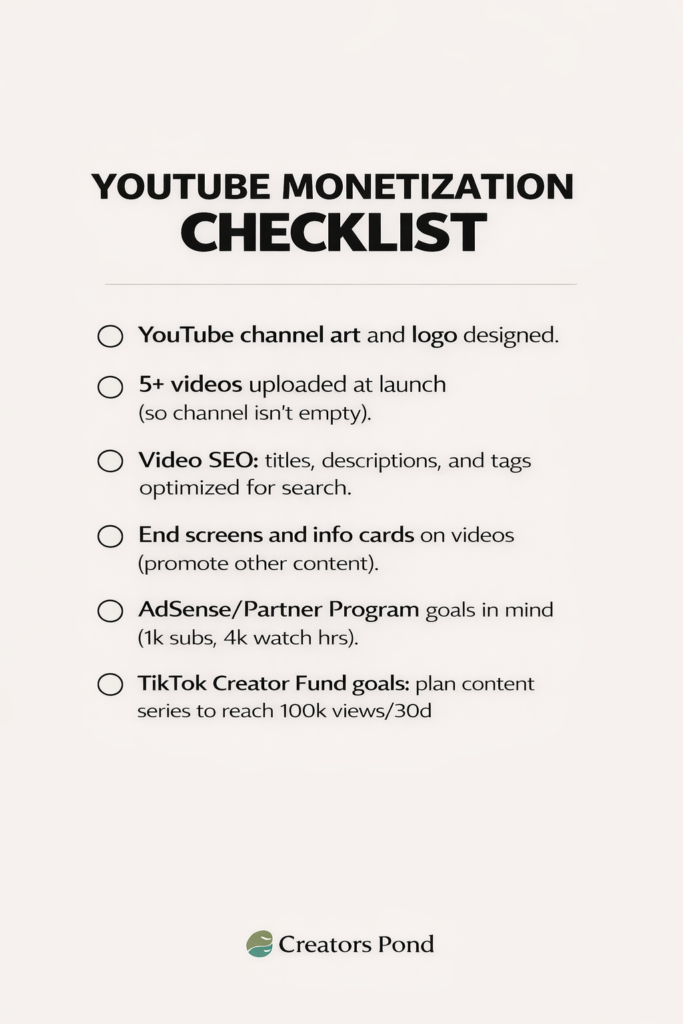
Channel Setup: Choose a clear channel name (often your own name or niche keyword). Write an engaging About description outlining what viewers will learn or enjoy on your channel.
Content Strategy: Plan videos around what your audience searches for. Use YouTube’s keyword suggestions or Google Trends. Topics could be tutorials, reviews, or storytelling that align with your niche expertise.
Thumbnails & Titles: Make bright, legible thumbnails with a clear subject (e.g. your face and product). Titles should include keywords and spark curiosity (e.g. “I Tried 5 Cheap Smartphones – Here’s What Happened”).
Consistent Schedule: Upload regularly (at least once a week). YouTube values consistency. Backstage advises posting often so viewers know when to expect new videos.
Engagement: Ask viewers to like/subscribe and pose a question in the video to encourage comments.
Playlists: Group related videos into playlists to increase total watch time (auto-play keeps viewers on your channel).
Monetization Prep: To earn from ads, aim to join the YouTube Partner Program (requires 1,000 subscribers and 4,000 watch hours in 12 months). Even before that, you can monetize through affiliate links in descriptions or by promoting products.
Mini-Checklist:
How Many Followers Do You Need to Be an Influencer?
There’s no fixed “magic number” – you can start influencing with a few thousand engaged followers. Industry guidelines break influencers into tiers by audience size:
| Tier | Followers | Example |
| Nano | 1,000–5,000 | A hobbyist or local expert. Very high engagement. |
| Micro | ~3,000–100,000 | Small-to-mid audiences. Often do well in niche markets. |
| Macro | ~100,000–1,000,000 | Broad reach; full-time creators. |
| Mega | >1,000,000 | Celebrity-level audiences. |
Even a nano-influencer (1–5k followers) can get brand deals, because they often have very loyal followers. In fact, TRIBE notes that once you have around 3,000+ followers, “you can start making money as an influencer”. At the same time, brands increasingly look more at engagement quality than raw follower count. A small audience that loves your content (lots of comments/saves) can be more valuable than a large, passive following.
So rather than chasing vanity metrics, focus on building an engaged community. As TRIBE concludes, “as long as you have at least 3,000 followers, it’s possible to find brands who will be super happy to collaborate with you”. Quality and niche fit often trump big numbers.
How Do Influencers Get Paid? (And How to Make Money)
Influencers monetize in diverse ways, often combining multiple income streams:
Sponsored Content (Brand Deals): This is the most common. A brand pays you to promote their product or service in a post, video, or story. Payments are typically a flat fee. McKinsey notes “the flat rates can be three to five figures, even for an influencer without millions of followers”. (Celeb-level influencers charge six figures or more per post, but micro-influencers might earn a few hundred dollars.) Some use the simple rule “$100 per 10K followers” as a baseline, but real rates vary by engagement, niche, and platform.
Affiliate Marketing: You promote products with trackable links or codes. When followers buy via your link/code, you earn a commission (often 5–30%). Example: Sharing a skincare product link on Instagram and getting 10% of each sale. Backstage notes affiliate links as a top YouTuber revenue source.
Ads/Platform Revenue: Platforms like YouTube, TikTok, or Instagram (via Reels bonuses) pay creators from ad pools. For YouTube, being in the YouTube Partner Program lets you earn roughly $4–$6 per 1,000 video views (that’s about $0.18 per view on average). TikTok’s Creator Fund and Instagram’s Reels bonuses also pay out based on view metrics.
Digital Products and Services: Selling your own products (e.g. e-books, courses, presets) or services (coaching, consulting, speaking) to your audience. For example, a fitness influencer might sell a $20 meal plan PDF or a $100 workout program.
Subscriptions and Memberships: Platforms like Patreon or YouTube Memberships let followers pay monthly for exclusive content or perks. The Backstage sisters cite Patreon as a way to fully fan-fund their channel.
Merchandise: Selling branded merchandise (t-shirts, mugs, etc.) to fans. This suits influencers with a very engaged community.
How to Price Yourself: As a beginner, set a starter rate formula. For instance, one approach is roughly $X per 1,000 engaged followers. Some creators aim for $100–$150 per 10k followers per sponsored post. But remember, brands care more about engagement rates and content quality. When negotiating, include factors like post type (story vs feed vs video), deliverables (number of posts), and usage rights (can the brand reuse your content?).
Pitching Brands: You don’t have to wait for brands to find you. Write a short, personalized pitch email. For example:
Subject: Collaboration Opportunity from a [Your Niche] Creator
Hi [Brand Name] Team,
I’m [Your Name], and I create [niche] content for [your audience]. I love your [product/brand] and think it fits perfectly with my audience’s interests. For example, I could create [brief content idea] to showcase [product benefit]. I have [X] followers with [Y]% engagement, and I’m confident they’d love your product.
I’d be thrilled to collaborate. Let me know if you’d like to discuss ideas or rates. Thank you for considering!
Best,
[Your Name] ([@yourhandle])
Always personalize: mention something specific about the brand. Follow up after a week if you get no response. (See below for sample pitch templates.)
Brand Influencers/Ambassadors: A brand influencer or ambassador is typically someone (sometimes in a long-term deal) who represents a brand over multiple posts. Think of them as the brand’s “go-to” influencer. To become one, continue delivering value and build relationships. Often brands invite ambassadors, but you can also pitch a “brand ambassador” program offering ongoing promotion for a retainer or product package.
Influencer Marketing (For Context)
Influencer marketing is the practice of businesses partnering with influencers to reach target audiences authentically. Brands run campaigns where they provide products or payments in exchange for content from influencers. Typically, an influencer marketing campaign involves: clear deliverables (e.g. “1 Instagram post + 3 Stories”), exclusivity clauses (whether the creator can promote competing brands), and usage rights (if the brand can reuse the content in ads). Influencers must also follow disclosure laws (e.g. tagging sponsored posts as #ad or #sponsored).
For creators, it’s important to deliver on time and follow the brief. Building a reputation for professionalism (good communication, high-quality content, meeting deadlines) can lead brands to seek you out for future campaigns.
Tools to Grow
As you grow, use tools to streamline the process:
Analytics: Tools like YouTube Analytics, Instagram Insights, or TikTok Analytics show your audience stats. For websites/blogs, Google Analytics tracks visitors.
Scheduling: Apps like Buffer, Later, or Hopper HQ help you plan and auto-post content (especially useful for consistent posting across time zones).
Link-in-Bio: Services like Linktree, Zoho Social or Beacons let you create a single landing page of links (website, products, affiliate links).
Audience Insights: Tools like HypeAuditor help both brands and creators vet influencer audiences. For example, HypeAuditor’s free Audit Tool analyzes an Instagram account for fake followers and gives an “Audience Quality Score” (e.g. 92/100). This ensures you’re building a real audience. (Brands use HypeAuditor to make sure influencers aren’t bought or fraudulent.)
Content Creation: Apps like Canva (graphics), Lightroom (photo editing), or CapCut (video editing) make it easier to produce polished visuals.
Media Kit: Create a simple PDF media kit listing your bio, audience demographics, and stats (follower count, engagement rate, avg. reach). Tools like Flipsnack or even Google Slides can help design one.
HypeAuditor Note: Platforms like HypeAuditor include AI fraud detection to flag fake engagement. For example, its Instagram Audit tool shows if an influencer’s audience is genuine. As a creator, you can also use such tools to monitor your own analytics and identify growth opportunities.
Mistakes That Stop Growth
Avoid these common pitfalls:
Copying Others (No Unique Voice): Many try to jump on the hottest niche blindly. But cloning popular niches leads to saturation. Instead, carve a unique angle on a topic. Replicating competitors’ content won’t make you stand out. Authenticity is key.
No Content Strategy (Posting Randomly): Posting without a clear plan or thesis yields little result. As Automateed warns, “Without a solid content strategy, your posts become random and ineffective”. Always tie each post back to your niche and audience needs.
Ignoring Trust Signals: If your content has no proof or outcome, followers may not believe you. For example, posting a weight-loss tip without before/after photos or testimonials weakens trust. Encourage UGC and social proof: share follower success stories or reviews. UGC and community features “build credibility”.
Treating Platforms the Same: Each platform has its own style. A polished studio video on TikTok might flop, and a casual TikTok clip may look out of place on LinkedIn. “Replicating the same post across all channels leads to poor performance”. Tailor content to each platform’s audience and format.
Chasing Vanity Metrics: Focusing solely on follower count or likes is a trap. Brands care more about deeper engagement (saves, shares, sign-ups). As one guide notes, prioritize engagement metrics like comments and shares over vanity metrics.
Over-Monetizing Too Early: Some try affiliate links or ads immediately, which can turn followers off if done poorly. On the flip side, never monetize at all and expect to grow for free can also stall you. Find a balance: once you have consistent content and some audience, start integrating gentle monetization (like affiliate links with disclosure).
Burnout: Posting every single day without breaks leads to burnout. Set realistic goals (e.g. 3x/week) and batch your work so you don’t lose steam.
By avoiding these mistakes and focusing on authentic, strategic growth, you’ll stand out compared to generic “influencer guide” content like the Coursera article, which covers the basics but not these deeper pitfalls.
Frequently Asked Questions
Is “influencer” the same as “social media influencer”?
Essentially, yes – all social media influencers are influencers, but not all influencers are on social media (some are in other fields like academia or entertainment). Online terms like “internet influencer” or “digital influencer” all mean people who use digital platforms to influence an audience.
How do influencers get started with zero followers?
Many start with zero followers. Key strategies: post consistently excellent content, engage with the community (comment on others’ posts, follow peers), and use relevant hashtags/trends to get discovered. Don’t be discouraged by initial zero; some TikTok or YouTube stars went viral with a single video shot in their bedroom! Building from scratch takes time, but focus on learning and iterating rather than immediate numbers.
How long does it take to become an influencer?
There’s no set timeline. It could take months or years. What matters is consistency and improvement. Some niches grow faster (e.g. a trending TikTok topic), while others take more time (a niche hobby). According to Coursera, “it takes time to become an influencer” because you need to establish authority and grow followership. Typically, you might start seeing traction after 6–12 months of regular effort.
Can you be an influencer without showing your face?
Absolutely. Many influencers are “faceless” or anonymous. For example, a cooking influencer might only show their hands preparing food, or a gaming influencer might stream with voice commentary only. The key is providing value – quality content trumps personality. However, personal connection does help build trust, so if not your face, consider a distinctive voice, avatar, or consistent style.
How do influencers get brand deals?
Brands find influencers through marketing platforms, agencies, or direct outreach. As mentioned, you can proactively pitch brands: email them your media kit and explain how a collaboration would benefit both. Platforms like Influence.co or Intellifluence (as Coursera suggests) can connect you with brands. Also, participating in affiliate networks or PR email lists helps. In short, build a record of quality content first, then reach out – highlight your engagement metrics and how your audience matches the brand’s target.
What is a digital/online/internet influencer?
These terms all mean the same thing: an influencer whose influence is exercised online/digitally, as opposed to traditional celebrities. It’s just another way of saying “social media influencer.” All of them emphasize that the person’s platform is on the internet.
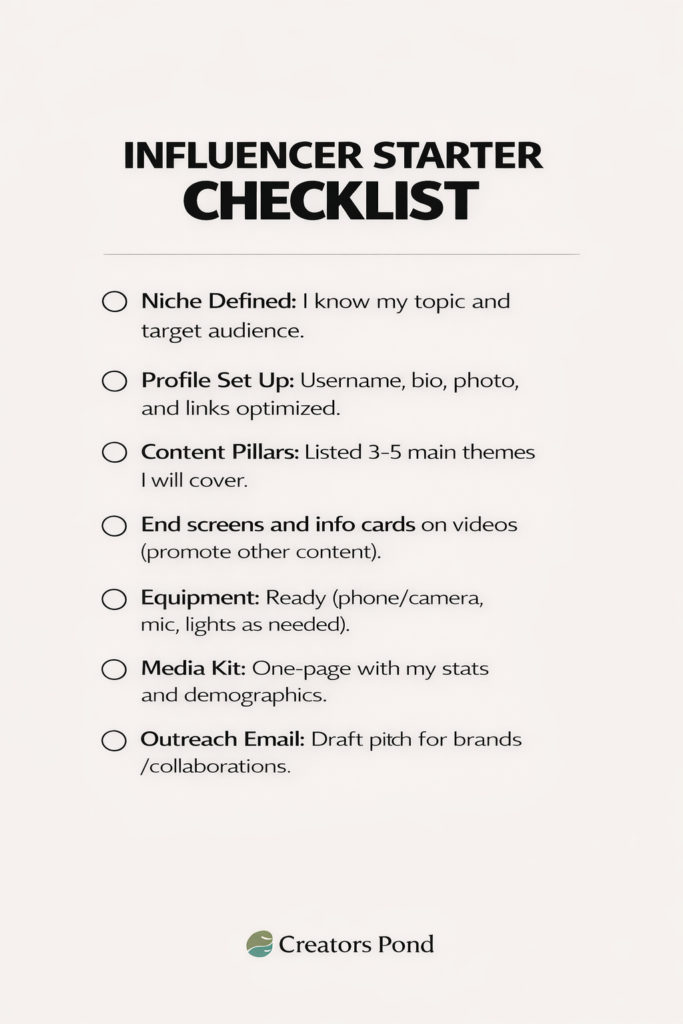
Influencer Starter Checklist (copyable):
30-Day Posting Plan (Example):
| Day | Content Idea | Format |
| Mon | Intro post (who I am + what I do) | Photo + caption |
| Tue | Educational carousel on niche tip | Carousel Post |
| Wed | Short tutorial or trend video | Instagram Reel |
| Thu | Q&A or poll in Stories | Instagram Story |
| Fri | Collaborator shout-out or duet | Instagram Reel |
| Sat | Share user-generated content (testimonial) | Story + highlight |
| Sun | Recap of the week (video or image) | IG Live or Post |
(Adjust topics to your niche; the key is consistency and variety.)
Brand Pitch & Rate Templates (copy/paste):
Initial Pitch Email (short):
Subject: Collaboration Proposal from [Your Name/Brand]
Hi [Brand] team,
I’m [Your Name], and I create [type of content] for [audience]. I admire [Brand’s] commitment to [something about brand]. I’d love to partner on a sponsored [platform] post featuring [product/idea]. For example, I can make a [describe content idea briefly]. My audience of [X] followers is very engaged (avg. [Y]% engagement), and I believe this would resonate strongly with them.
Could we discuss this opportunity? Thank you for your time and consideration.
Best,
[Your Name]
[Your Social Handle] | [Your Email]
Rate Negotiation Follow-Up:
Hi [Name],
Just checking if you had a chance to review my proposal. For context, I typically charge [$X] for a [type of post] and [$Y] for a [bundle of posts]. Given my audience demographics and engagement, I’d be happy to discuss a package that works for both of us.
Looking forward to your thoughts!
Thanks,
[Your Name]